
Radius Institute for Road Safety
Road deaths are one of the world’s great avoidable tragedies.
Every day, more than 3,000 families get the news no one ever wants to hear: their child, parent or friend has been killed on the road. That’s more than a million lives lost each year.
Radius exists to help change that. We work alongside governments to strengthen their speed camera programs, translating evidence into lives saved.

01 — The problem
The leading killer of young people.
Road crashes are the leading cause of death for children and young people aged 5 to 29, and kill more than a million people every year: about twice as many as HIV/AIDS or malaria. Yet road crashes remain among the world's most underfunded health crises.
Sources: WHO fact sheet, 2026; UN Road Safety Fund, 2025
The WHO African Region has 15% of the world's people and just 3% of its vehicles, yet 19% of its road deaths and the highest road death rate of any region.
Source: WHO Africa report, 2023
- 1.16 million
people are killed on the world's roads every year.
That's more than 3,000 every day.
Source: WHO fact sheet, 2026
- 20–50 million
more people are injured each year.
Many are left with a disability.
Source: WHO fact sheet, 2026
- 3%
of GDP is lost to road crashes each year in most countries.
Through medical costs and lost productivity.
Source: WHO fact sheet, 2026
Deaths per year, worldwide
- Road crashes
- 1.16M
- Malaria
- 610,000
- HIV/AIDS
- 570,000
Latest estimates for each cause. Sources: WHO fact sheet, 2026; WHO malaria report, 2025; UNAIDS, 2026
Young people
Not just teenagers: from age 10, no cause kills more young people.
Rank of road injuries among causes of death worldwide, by age, 2023 (modeled estimates). Source: Global Burden of Disease study, 2026
02 — The solution
Lower speeds save lives.
Speed is a factor in around a third of road deaths in high-income countries and up to half in low- and middle-income countries. It affects both whether a crash happens and how badly people are hurt.
Source: WHO, Managing speed, 2017
That makes slowing traffic one of the most powerful ways to save lives on the road.
Speed and fatal crashes
1%4%
- 1% faster
- speed +1%+4% fatal crashes
- 5% faster
- speed +5%+22% fatal crashes
- 10% faster
- speed +10%+46% fatal crashes
Based on the Power Model of speed and crash risk, the basis of WHO's 1% → 4% figure. Sources: Nilsson, 2004; Elvik, 2013; WHO fact sheet, 2026
Slow traffic by 5%
19
On a 60 km/h road, that's an average speed of 57 km/h instead of 60.
Estimate based on the same Power Model and WHO's 1% → 4% figure.
03 — Why speed cameras
Speed cameras are a proven way to save lives.
Speed limits only save lives when drivers keep to them. The WHO's evidence-based road safety package makes managing speed a priority, and the World Bank rates speed cameras as highly effective. Decades of research show that where speed cameras operate, drivers slow down and serious crashes fall.
Sources: WHO, Save LIVES, 2017; World Bank, 2021

fewer speeding vehicles after cameras were introduced, in most studies of a major systematic review.
Source: Cochrane review, 2010
Cameras save lives only when the whole system behind them works. That is where our work begins.
Case study
Early evidence from Rwanda
Rwanda was the first low-income country to roll out speed cameras nationally. Peer-reviewed studies found drivers slowed down at camera sites, and linked the rollout to fewer road deaths and serious injury crashes.
Source: Delavary et al., 2024
Read the research by Healthy People Rwanda and TIRF ↗04 — Our approach
An independent partner for safer speeds.
We work alongside governments and road safety agencies across sub-Saharan Africa to help their speed camera programs save more lives. We are an independent NGO, our advice is grounded in evidence, and we have no commercial ties to camera suppliers or operators.
Our advice serves one goal: fewer deaths on the roads.
- 01
Assess
an honest, independent view
We review how a program is working today, using the World Bank's readiness guide and, where possible, measuring changes in real-world speeds.
- 02
Advise
on the priorities you set
Working with government partners, we identify the steps that would help the program grow, and offer expert technical advice to put them in place.
- 03
Support
with specialists and funding
We bring in specialists and local partners, and can fund targeted pieces of work, such as consultants, so improvements happen sooner.
05 — People
Co-founders
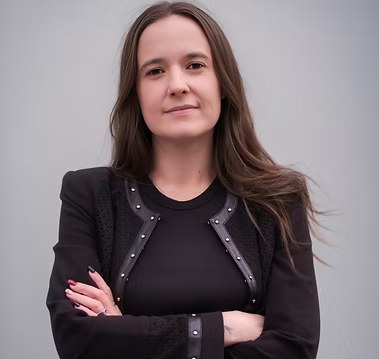
- Former CEO and COO
Larissa Vaughan-Rowe brings more than a decade of experience in leadership, fundraising, and public-interest advocacy. Prior to founding Radius, Larissa was the CEO of the Centre for Effective Altruism, overseeing a 20-person international team and an annual budget exceeding $5 million. She later served as COO of a research institute, directing strategy and convening researchers, funders, and institution-builders to invest in breaking bottlenecks to scientific progress. Larissa has also stood for local elected office in the UK and spent three years advocating for parliamentary action on global health.
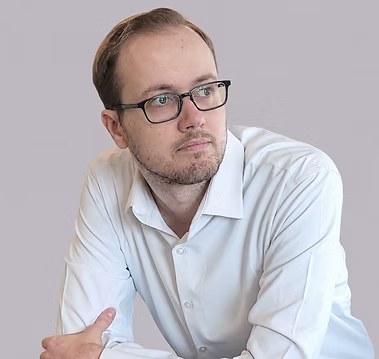
- PhD, Philosophy
- Y Combinator alumnus
Dr. Kerry Vaughan-Rowe brings 15 years of NGO experience, both as a researcher and a founder of new organizations and initiatives. He has a PhD in philosophy, where his work focused on topics at the intersection of behavioral economics and ethics. Before co-founding Radius, Dr. Vaughan-Rowe participated in the Y Combinator startup accelerator, where he founded a donation platform that raised $2M in the first year and more than $110M in lifetime funding, and was a Product Manager at the Arnold Ventures foundation.
Advisors
Decades of enforcement, road safety and global health expertise.
Philip Wijers
- Former Chair, IRF Road Safety Committee
- Advised governments in 60+ countries
Philip Wijers is an expert in traffic enforcement and road safety and the former Chair of the International Road Federation's Road Safety Committee. He previously spent 15 years as Director of Government Affairs at Sensys Gatso Group, a Swedish-Dutch road safety enforcement systems company, advising governments across 60+ countries on effective speed enforcement.
His work spans Africa, Asia, and Europe, including briefings to the African Union and African Development Bank, and papers on public-private partnerships in traffic enforcement.
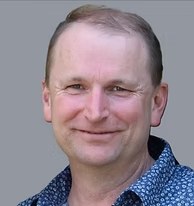
Dr. Blair Turner
- Lead author, Guide for Safe Speeds
- 30 years in road safety, 40+ countries
Dr. Blair Turner is a road safety specialist with 30 years' experience, working in over 40 countries. He spent several years as a consultant for the World Bank's Global Road Safety Facility, where he was lead author of the Guide for Safe Speeds and the Guide for Road Safety Interventions.
He co-authored the peer-reviewed study of Rwanda's national speed-camera program, the first in an African low-income country. Previously, he was the lead author and project manager for the World Road Association's flagship Guide to Road Safety.

Jack Rafferty
- Co-founder, LEEP (lead poisoning)
- Named to Vox's Future Perfect 50
Jack Rafferty is the co-founder and former Director of the Lead Exposure Elimination Project (LEEP). LEEP works with governments, standards bodies, and paint manufacturers in more than a dozen countries across Africa, Asia, and Latin America to eliminate childhood lead poisoning and has prevented millions of cases worldwide.
Jack was named to Vox's inaugural Future Perfect 50, won a Chicago innovation prize for research into green iron, and has worked as a philanthropy advisor with a number of major foundations and NGOs.
06 — Support our work
Fund evidence-led road safety.
Radius is funded by donors focused on cost-effective, evidence-based ways to save lives. Your gift pays for research and technical assistance that help governments strengthen their speed enforcement programs.
Donations go through our fiscal sponsor, Players Philanthropy Fund, a 501(c)(3) public charity, and are tax-deductible in the US.
For larger gifts or grants, email founders@radiusinstitute.com.
07 — Contact
Working on road safety? Let's talk.
We'd like to hear from government agencies, implementation partners, funders and researchers.
founders@radiusinstitute.comGet our newsletter
Occasional updates on our research, our work with governments, and what we're learning.